First three chapters · free reading
Sample
The first three chapters. The rest is available in paperback or hardcover on Amazon.
“You let the material tell you where to go, and it tells you at every step what the next has to be…”
— Barbara McClintock
Chapter 1: Discovery
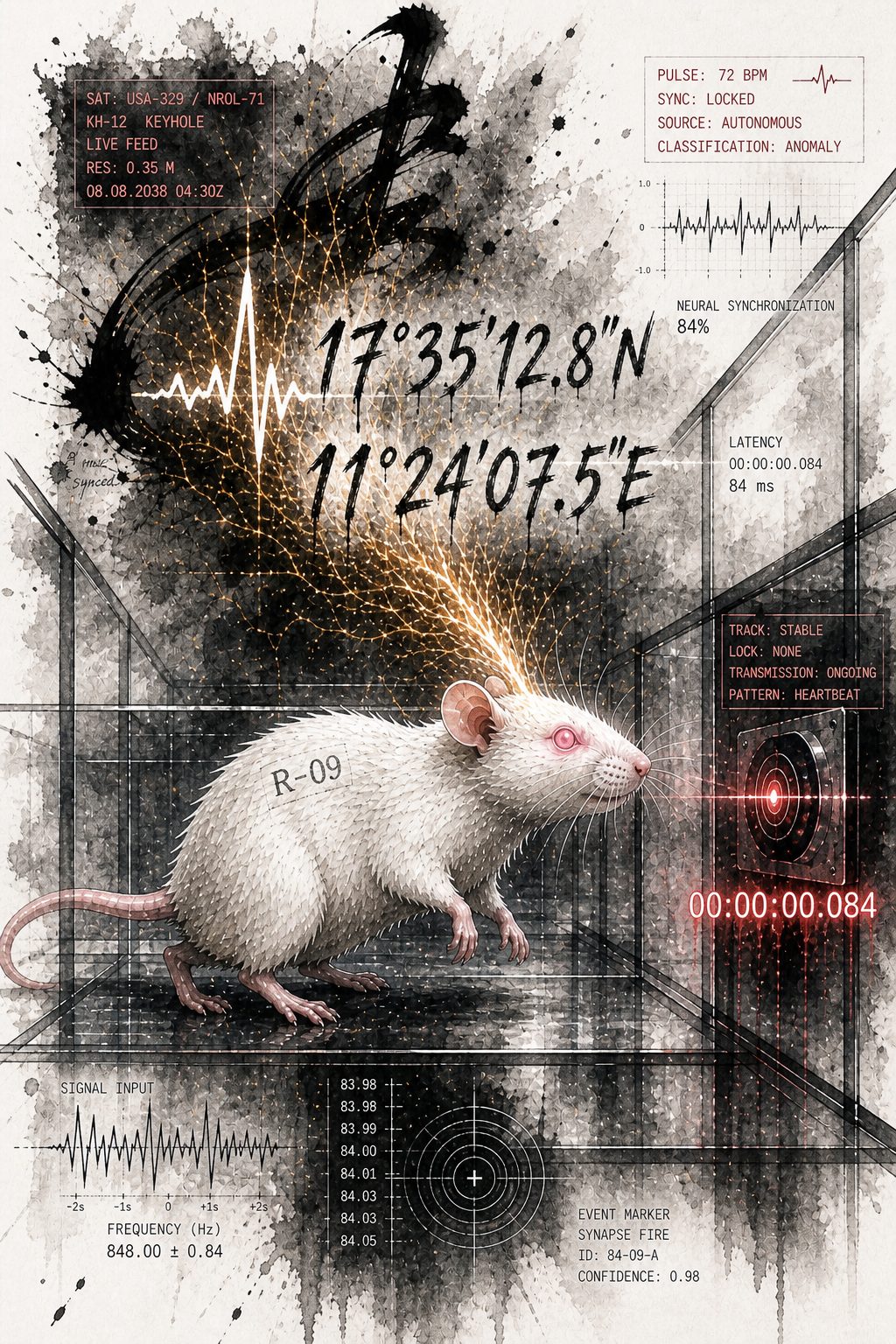
From the diary of Oksana Severyn
17 March 2034. The Echo facility, DARPA. 03:47.
Can’t sleep. Again.
The doctor writes prescriptions I never fill. They make me slow. I can’t afford slow.
Instead of sleep—the lab. This is where I’m home.
Today subject R-09 broke the record. Again.
Eighty-four milliseconds.
My hand shook while I wrote that.
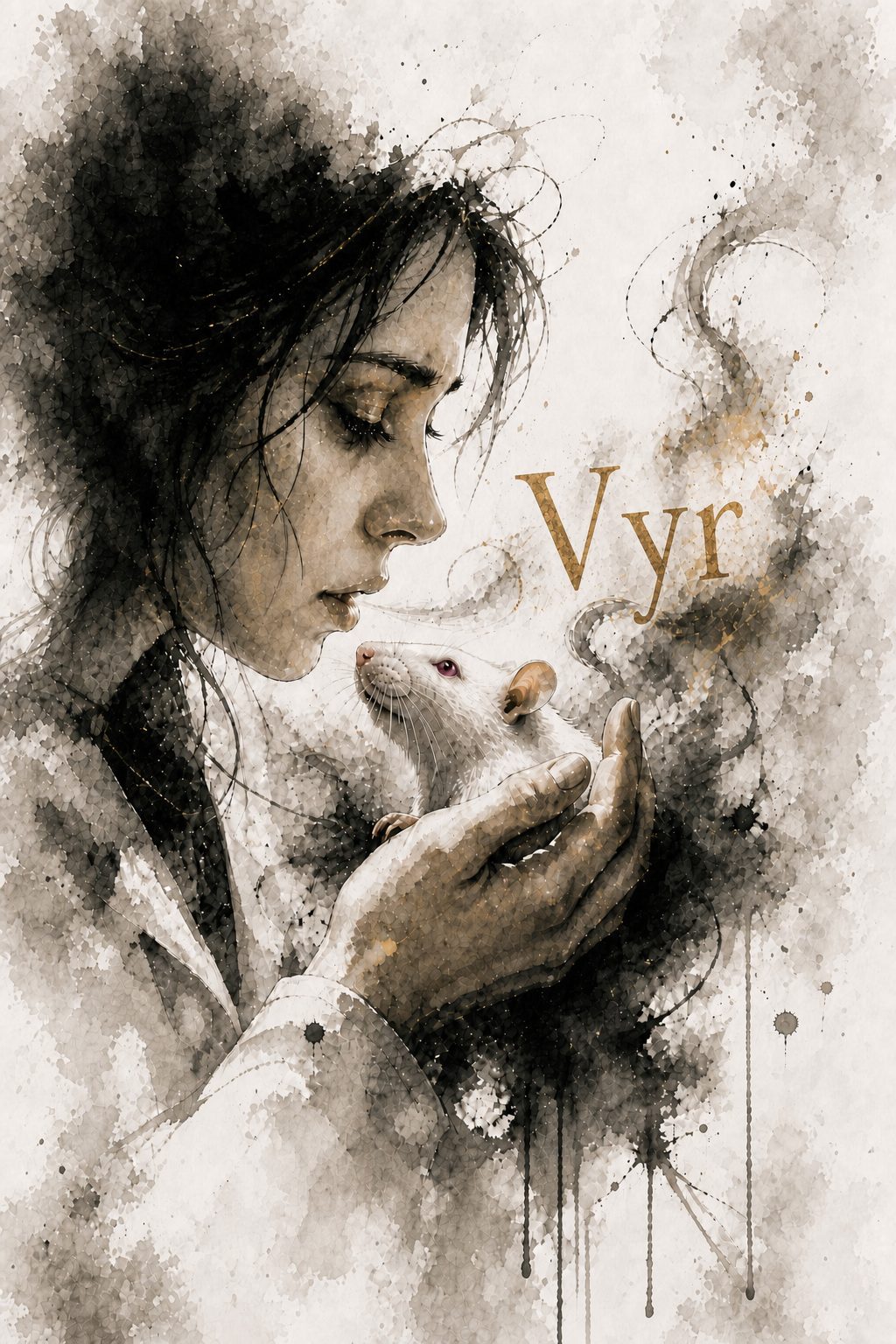
Sometimes I think he’s watching me. Albino eyes, pink, clear as ruby glass. White, almost lit from inside under the lamps. The others joke that he looks like a ghost.
I don’t laugh. Ghosts are what come at night.
The dream she is afraid of
October. Morning. The kitchen smells of coffee and burnt toast—Serhiy always forgot it in the toaster.
Petryk is on the floor, drawing. A tank. But where the gun should be, a flower. Big and yellow, like a sunflower.
“Mom, look! It’s a tank-gardener!”
“It’s beautiful, sweetheart.”
“He doesn’t shoot. He plants flowers. Wherever he drives, things grow.”
“And last night I dreamed about the white one again. He doesn’t say anything. He just looks—from somewhere behind glass.”
“Your father reads you too much Lem at bedtime,” she smiles.
Serhiy sets the coffee down in front of her. No sugar, with milk—he remembers. He always remembers.
“Will you be late tonight?”
“I don’t know. Maybe.”
“We’ll wait for you.”
He kisses her temple. His lips are warm, a little rough. The stubble he never shaves all the way down. Petryk runs over—kisses her twice. Left cheek, right cheek.
“Two kisses—so nobody forgets you!” he explains every time, as though she could be forgotten.
And then, very quietly, as if it were nothing:
“Will you buy me markers tomorrow? The yellow one ran out.”
She doesn’t see what he’s getting at. And doesn’t ask.
On the refrigerator, a drawing. A tank with sunflowers where the guns should be. Beside it, last week’s: a rocket with windows, a smiling smudge in each one. “That’s us flying to Mars, Mom. The whole family.” And in the corner of the sheet, someone small and white, with two pink dots for eyes.
The door closes. Footsteps on the stairs. The smell of coffee stays.
Then—silence.
Not an explosion. Not thunder. Not a siren. The absolute, final silence that comes when a place where people were living a moment ago stops existing. When the drawing on the refrigerator becomes the last drawing.
Oksana wakes. She doesn’t scream—she lost the knack for that a long time ago. She only lies there and listens to her heart.
Two hundred beats a minute. Three forty-seven in the morning.
The lab smelled of ozone, coffee, and bleach. The fluorescent lamps hummed at a frequency most people can’t hear. Oksana heard it—a side effect of never sleeping.
“Series thirty-seven, specimen R-09,” she dictated into the recorder, pushing her glasses back up. “Reaction time: eighty-four milliseconds. Previous record beaten by twelve percent.”
The rat sat in a clear sphere in a tiny VR headset, paws on the touch panel. An albino—an anomaly the protocol said should have been culled, but something got in the way: a lab technician’s carelessness, or fate.
The monitor showed what he “saw.” A maze strung with red targets. He was taking them apart with surgical efficiency: a hundred thousand points, not one mistake.
Oksana rubbed her eyes.
“Scheiße!”
Dr. Klaus Weber, from the doorway. He swore in his own language only when something genuinely surprised him.
“Oksana, are you seeing this?”
“I’m seeing it.”
“That’s faster than a human.”
“I know, Klaus. I’ve known for three weeks.”
On the screen R-09 finished the level and cleaned his whiskers.
“Why didn’t you tell me?”
“I wanted to be sure.” Oksana stood, worked the stiffness out of her shoulders. “Because it’s impossible.”
“And if it isn’t?”
Oksana closed the window with the graph in it—carefully, the way you put a photograph away in a drawer.
“Then very soon it stops being ours.”
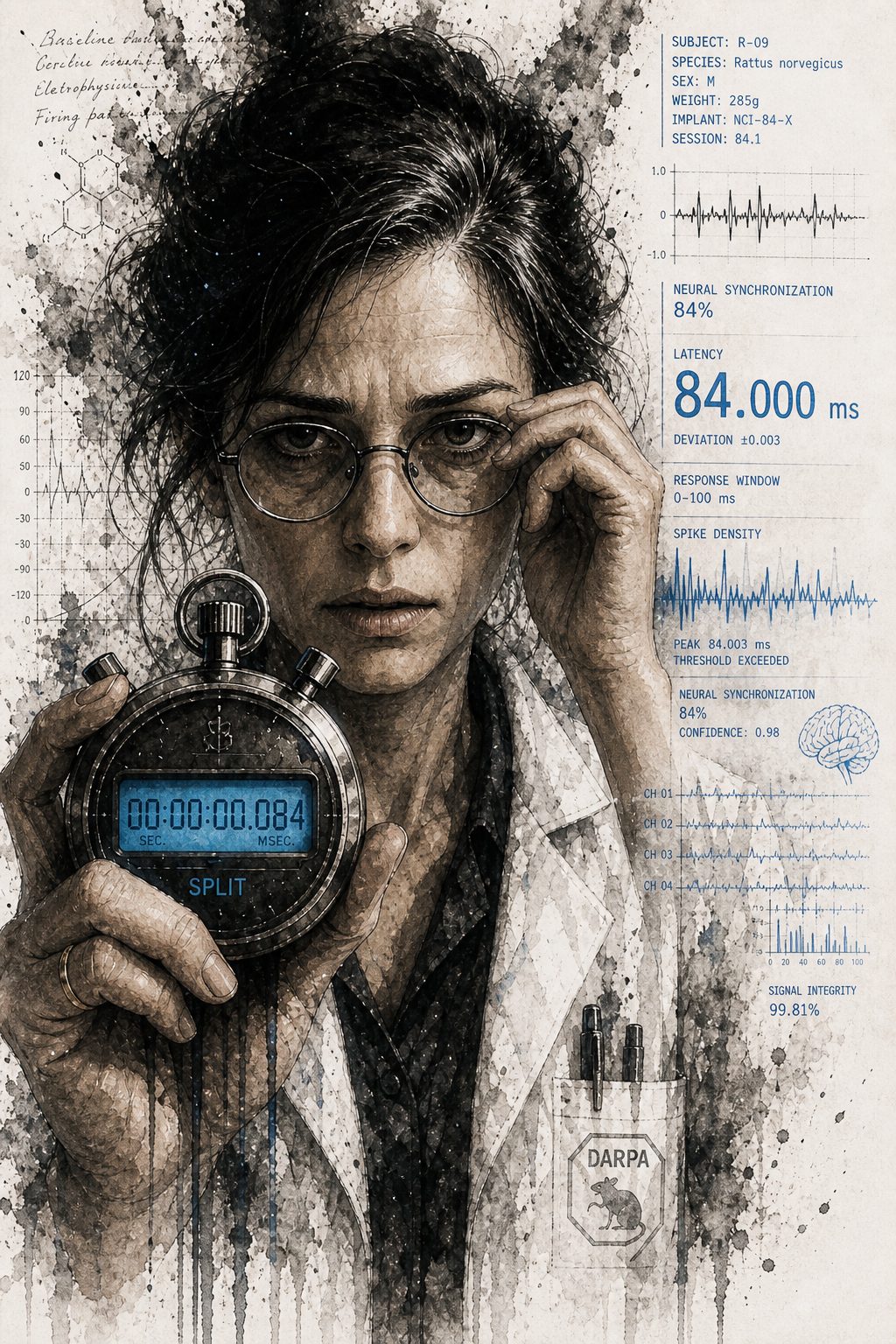
From the research journal of Project Ratus (Entry #2847)
Note: internal use only. Clearance level: Sigma.
Reaction time—basic principles
Human reaction is bounded by physiology. Signal from the retina—to the visual cortex, to the premotor cortex, to the muscles. Minimum: 150-180 ms in the best athletes—a physical limit.
The rat brain is built differently.
Only 2 grams against 1400 in a human. But that is exactly the advantage. Shorter distances between neurons, fewer delays. Evolution spent millions of years optimizing this brain for one thing: survival.
The average lab rat reacts in 120-140 ms, already faster than a human. R-09 holds a stable 84 ms—latency from the appearance of a visual target to first movement in a standardized VR test (maze with targets). Not the speed of thought, not the speed of action—response time to this one visual target-acquisition stimulus. A statistical anomaly.
Hypothesis: mutation in the SCN1A gene—the sodium channels of the neurons. Faster depolarization = faster signal transmission.
Observation: R-09 displays uncharacteristic behavior. Lingers at the walls of the cage when people pass. Pauses during VR sessions with no tactical necessity.
Implications: if the mutation can be reproduced…
(Entry breaks off)
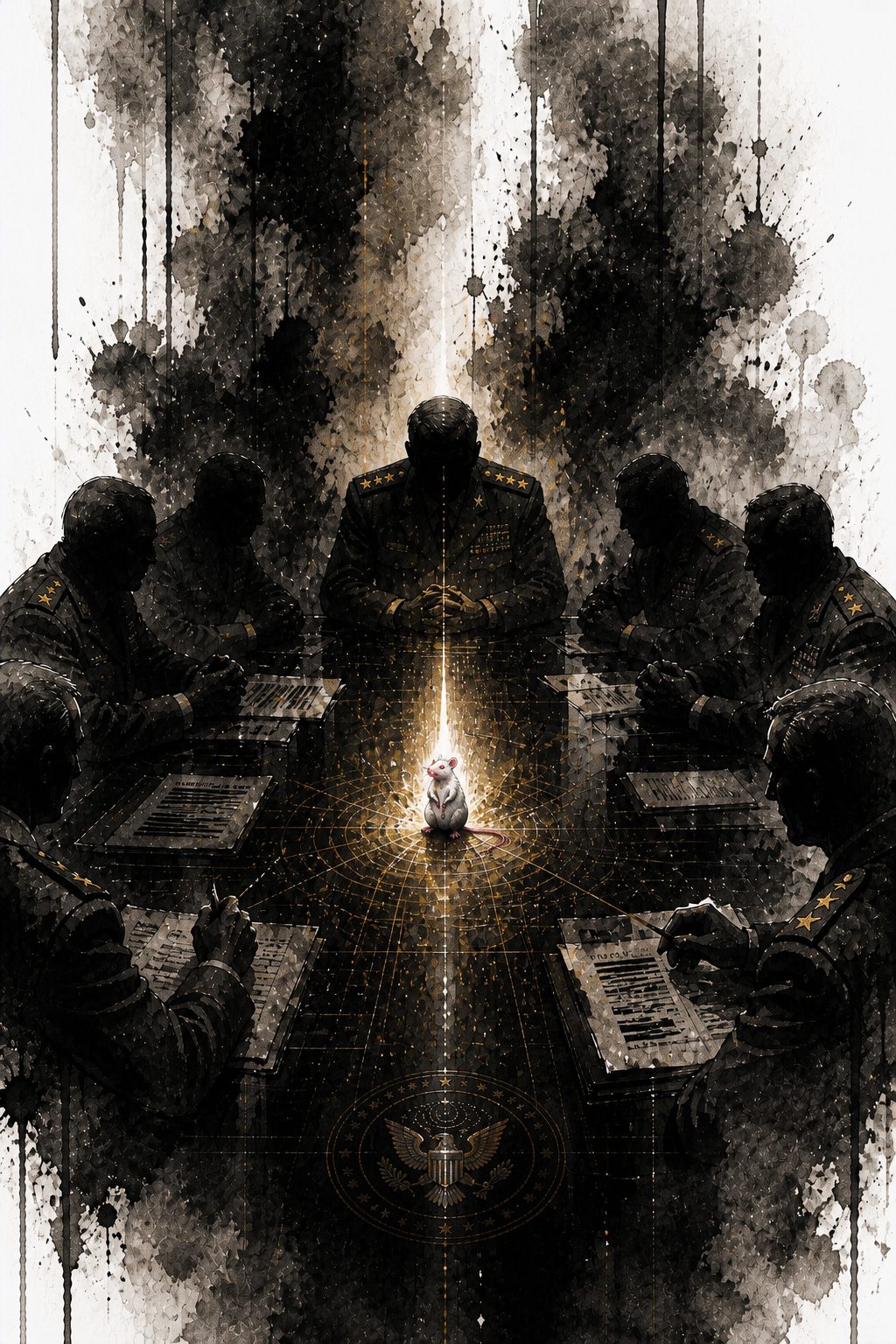
From the notes of Maryna Koval, project psychologist
17 March 2034. Personal.
I should never have come here.
In the war I pulled people out from under the rubble in Mariupol. Counted bodies. Then therapy for soldiers who had run out of tears.
And now I’m here, in an underground lab in Virginia. My job is to assess the psychological condition of rats.
Rats.
Oksana says it matters, that something is happening to them. I thought she was overstating it.
Then today I saw R-09.
He looked at me. Not at my hands—he tracked my face. Animals don’t do that.
Patients do.
I should never have come here. Because now I won’t be able to leave.
Oksana went down the DARPA corridors with the particular walk of people who have seen a real war—as though she always knew where the exit was.
The Americans didn’t understand it. They had watched the war on television, sympathized, helped, sent weapons. But they didn’t know what a burnt-out IFV smells like. They had never sat in a basement counting the seconds between the flash and the blast.
Oksana knew.
From the letter of Oksana to a friend (never sent)
Natasha,
You asked why I don’t come back.
I don’t come back because everything there is about them. About Serhiy, who read Lem out loud to me before we slept. About Petryk, who was seven.
In twenty-six I lost them both. I was at the lab. They were at home.
Mother is still there. She goes to the graves. She says she prays for me.
I don’t pray. I work.
Here I can turn pain into formulas, loss into hypotheses, grief into data.
And you know what? It works. My rats already shoot better than snipers.
I meant to finish by saying why I need this. I started: “so that no mother ever again…”—and deleted it.
Yours, O.
In the mid-twenties Oksana ran a group of kamikaze drones in the east—she was the one who worked out how to teach a machine to “see” a target: not to recognize a shape, but to predict where it was going.
Her drones were crude—Chinese controllers, homemade explosives—and they worked: hundreds of tanks and positions killed by small flying suicides.
“Your birds,” the soldiers called them. Oksana hated the name. Birds are alive. What she made was not.
And then—Kharkiv.
From the diary of Taras Kozak
17 March 2034. Writing because the psychologist says it helps. It doesn’t help, but I write.
Today I watched Severyn look at her rat.
That’s how people look at children. Or at bombs.
The Americans think we’re heroes. Consultants with “combat experience.” No. We’re the ones who lived. Not the same thing.
Oksana’s rats are faster than us. More accurate. No fear, no second thoughts.
The question is simple: what happens when it works out that we’re using it. I’ve watched a soldier work that out.
Two fingers gone since twenty-five. Never got the trick of holding a pen with three. It comes out crooked. The psychologist says never mind, the point is that I write.
“Heard the news?”
Taras Kozak was standing at the coffee machine—tall, lean, a face that looked cut out of old wood.
“I don’t like news,” Oksana said.
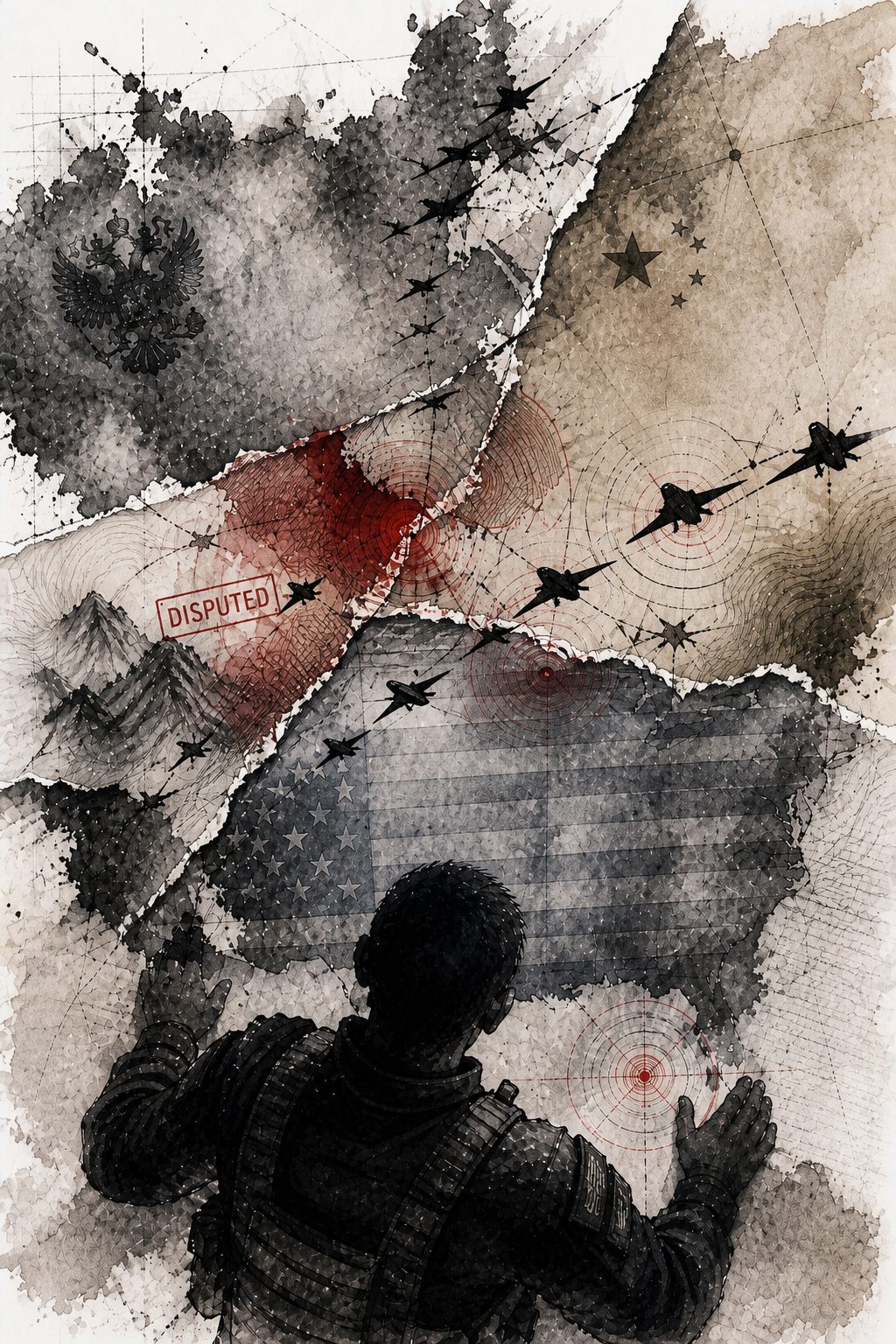
“You’ll like this one.” He came closer. “The Pentagon wants to show your rats to General McKenzie.”
The coffee nearly went over onto her lab coat.
“What? We’re not ready. This is basic research—”
“Oksana.” He gave her the look of a man who knows how the system works. “They’re not asking whether we’re ready. They’re asking whether it can be made into a weapon.”
She said nothing. Behind the screen that pretended to be a window, the sun was coming up over Washington. An artificial dawn for people who live underground.
“Can it?” Taras said.
Oksana thought of R-09—eighty-four milliseconds, faster than a sniper, craftier than a drone.
“It can,” she said. “I’m afraid it can.”
“Then get ready. McKenzie isn’t a man you say ‘no’ to.”
“Why now? We’ve been at this three years. Why the sudden interest?”
Taras sat down on the edge of the table. With his thumb he rubbed the smooth pink skin where two fingers used to be.
“After Kats it’s a junta over there,” Oksana said. “I do still listen to Portnikov once a quarter.”
“And I read what the news doesn’t say. The budget has doubled in two years.”
“China’s building up too. After the coup Xi cleaned out the reformers.”
“No ceiling on the budget. They don’t know about our rats yet. When they find out, they’ll run to catch up.” He got up. “The big ones play. The small ones pay.”
“Only now we’re at the table too,” Oksana said quietly.
He left without looking back. His steps even, certain, a soldier’s.
Oksana stayed where she was. The coffee had gone cold. She drank it anyway.
And somewhere deep in the lab R-09 stirred in his sleep.
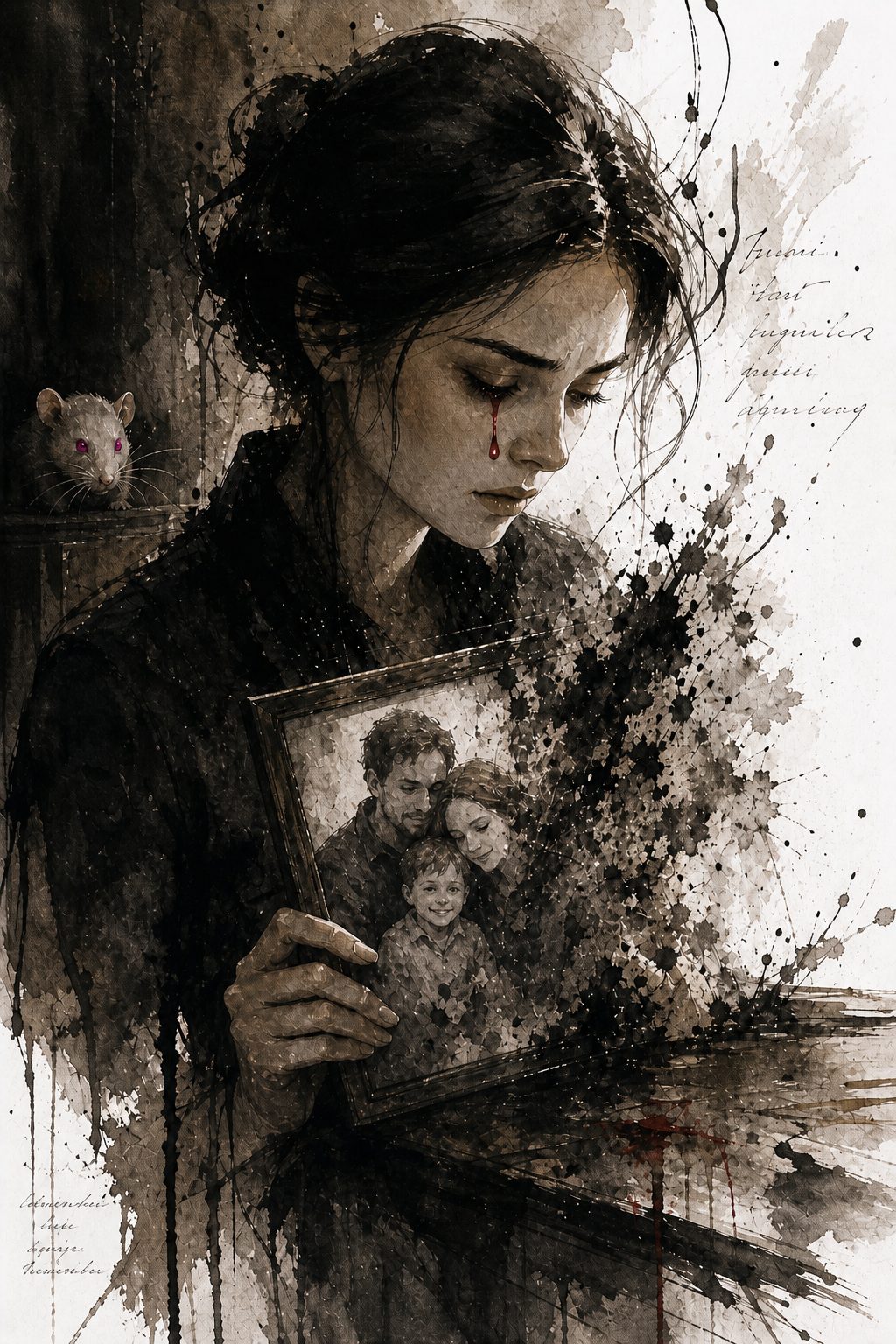
From the minutes of the meeting (Conference Room “Bravo,” level -8)
Present: Lt. Gen. R. McKenzie, Colonels J. Herndon, M. Chen, T. O’Brien; civilian consultants K. Weber, O. Severyn, M. Koval; observers—data classified.
Subject: Project Ratus, evaluation phase.
McKenzie: Dr. Severyn, I’m told you have something… unusual.
Severyn: Yes, sir. Permission to demonstrate.
(Video demonstration: 20 rats in a VR simulation of urban combat—40 targets in 2 minutes 14 seconds, zero errors.)
McKenzie: (pause) Is that real time?
Severyn: Yes, sir. Reaction time of our best specimens is 84-90 milliseconds. Three times faster than the average human. Almost twice as fast as the best sniper.
McKenzie: And intelligence? A rat can’t plan an operation.
Severyn: (pause) That’s the next stage, sir. We’re working on tandems.
O’Brien: Tandems?
Severyn: An AI module to complete the rat. The AI supplies strategy, analysis, memory. The rat supplies instinct, adaptability, speed. Together—more than the sum of the parts.
McKenzie: Sounds like science fiction.
Severyn: Thirty years ago the smartphone sounded like science fiction too, sir.
(Laughter in the room)
McKenzie: What does scaling it cost?
Severyn: Sir, I have to raise the ethical aspects—
McKenzie: Dr. Severyn. You lost your family in the war. A husband. A son. I’ve read your file.
Koval: (quietly) Sir, with all due respect—
McKenzie: (interrupting) How many American mothers won’t weep over coffins if your rats do the fighting instead of their sons?
(Pause: 12 seconds)
Severyn: Two hundred million for the first year. Access to Sigma-level facilities. And one condition.
McKenzie: Which is?
Severyn: Psychological monitoring. Full. For every specimen. Dr. Koval heads it.
McKenzie: You want a psychologist working with rats?
Severyn: I want to know what we’re making, sir.
McKenzie: (long pause) Approved.
That evening Oksana didn’t go to the celebration.
She sat in the empty lab. Looked at R-09’s cage. The rat wasn’t asleep—he sat by the wall and watched her.
And at the same time—something else.
She opened her laptop. Not a report, not a transcript—a letter.
Ihor,
Remember twenty-three, you building drones in a basement under shelling out of washing-machine parts? And you saying: “War is won by whoever adapts faster. Not the stronger, not the richer—the faster.”
I need people who understand war from the inside, who know what a second costs, who can make the impossible out of nothing.
Come. There’s something here you have to see.
Yours, Oksana.
P.S. He’s white. White as snow.
She hit send and shut the laptop.
The answer came two hours later. No greeting, the way it always is with him.
Flying out tomorrow. We’ll talk.
84 ms. Interesting. We tried once… No, not over the phone. I’ll show you when I land.
— I.
Oksana read it and killed the screen.
R-09 came to the glass and stood up on his hind paws. Oksana laid her palm against it. The rat lifted a paw and touched the glass from the other side.
Sample R-09. Third week running, he comes to the glass when I walk in. A habit takes longer to form. This one took days.
I have no control group—he is the only one of him.
Recording without a conclusion.
R-09 lowered his paw and went back into the depth of the cage. But before he curled up, he looked back once, at her.
Oksana smiled.
“You gave me a soul, as a sharp knife gives a voice to a quiet willow branch.”
— Lesya Ukrainka, “The Forest Song”
Chapter 2: Tandem
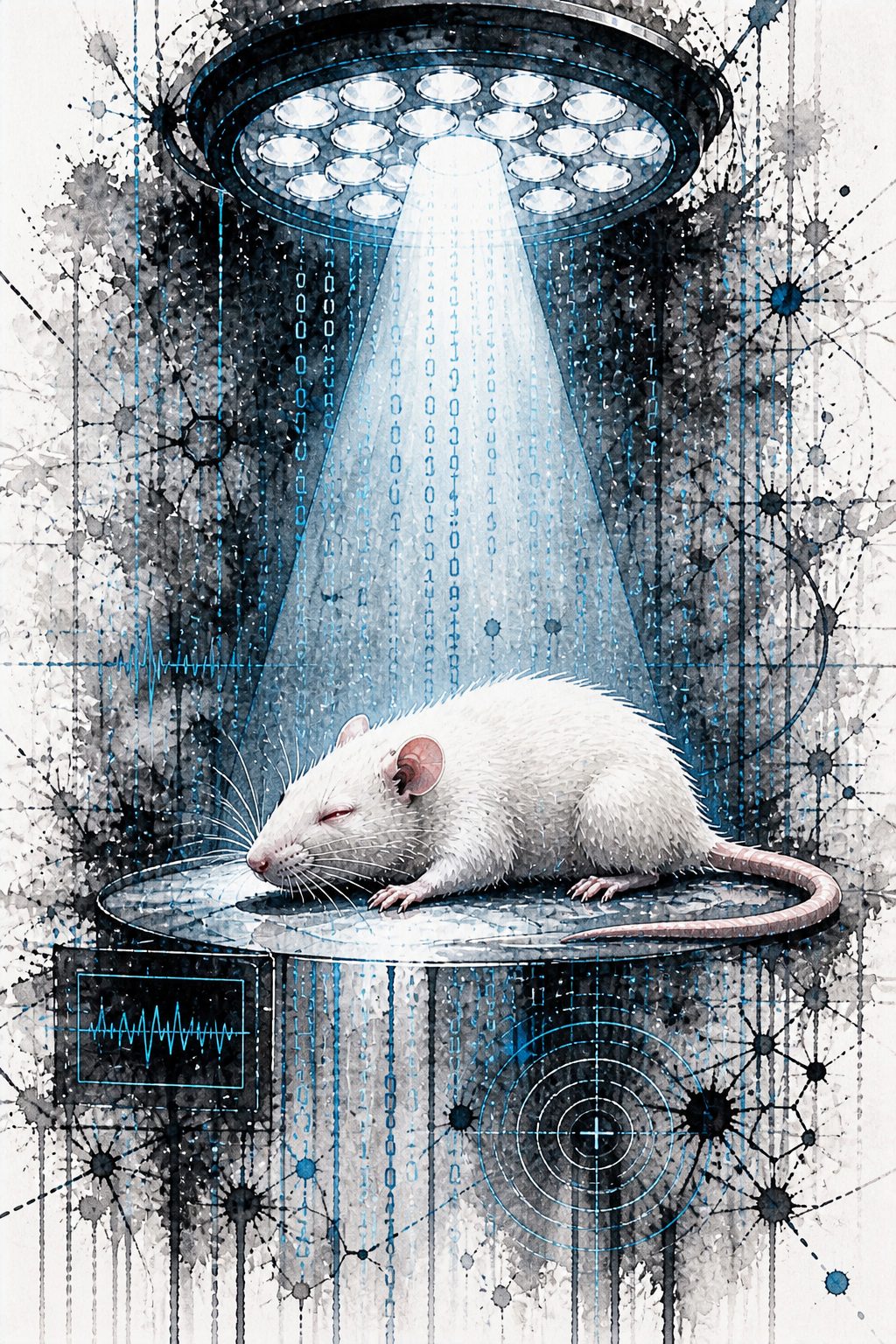
From the diary of Ihor Levchenko
3 April 2034. Dulles International Airport. 14:22 local time.
America smells of air conditioning and fear.
Not the fear I know—not sweat under body armor, not the metallic taste of blood. A different one, sterile. Like a hospital before surgery, when you don’t know if you’ll wake up.
Twelve hours in the air. The body kept waiting for the hit—a missile, a blast, a siren. It still doesn’t believe it can be any other way.
Oksana met me at the exit. Thinner—by ten kilos. Grayer still. But the eyes were the same: dark, deep.
“Ihor.”
“Oksana.”
We didn’t embrace. Just stood there looking at each other.
“You got my letter,” I said.
“Otherwise you wouldn’t be standing here.”
“What do you want to show me?”
She smiled. The smile I’d seen back in twenty-three, when her first neurodrone—put together in a basement under shelling—flew crooked, but flew.
“The future,” she said. “Or the end of the world. I haven’t decided yet.”
From the diary of Ihor Levchenko (continued)
4 April 2034. First night at the facility.
Can’t sleep. Too quiet.
Ten years ago—blasts, the roar of generators, a radio wheezing. Now—only the servers humming. The quiet makes me want to scream.
Oksana showed me the lab. Sterile corridors, white light, people in lab coats. They look at me like I’m an alien. A Ukrainian. A war they’ve only seen on the news.
And then—the rats.
Hundreds of cages. But one—white, pink-eyed—sat at the glass and watched me. Not looking for food. Just watching.
“This is R-09,” Oksana said. “Our best.”
“Best at what?”
“At everything.”
She turned on the monitor. A rat in a tiny helmet was playing a VR simulation. Fast. No mistakes.
“Eighty-four milliseconds,” Oksana said. “His reaction time. Three times faster than a human.”
I looked at the screen and thought about the boys who died because they were a fraction of a second late.
“You want to make a soldier out of him,” I said.
“I want fewer people in the war.”
She didn’t say “so that nobody dies.”
“Then show me the code.”
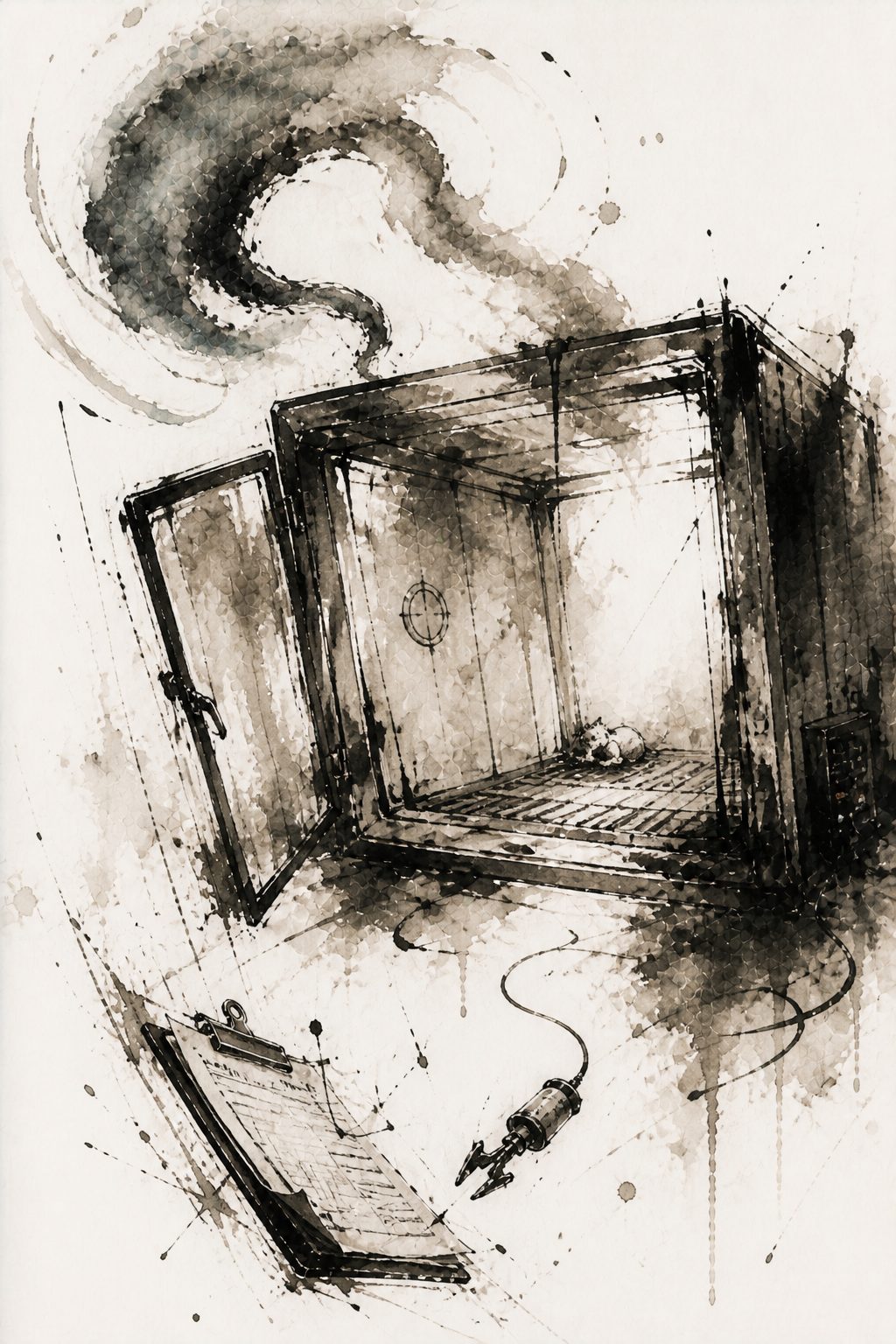
The memory he carries in his heel
December 2027. Kharkiv. The basement of an apartment building.
The fourteenth hour of unbroken shelling. The walls shake. Dust sifts from the ceiling like snow—only gray, and bitter on the tongue.
Ihor sits in the guts of dismantled washing machines—motors, controllers, copper wire. By day, drones, small and lethal: “Gnusmas” at the positions—Samsung backwards. By night, something else: Zoria, a project shut down in October as “dangerous.” The commission ordered everything destroyed. Ihor said “yes” and destroyed nothing.
Beside him—Dmytro. The algorithmist, the brain of Zoria. Quiet, always quiet, writing code on a laptop. Ihor builds the architecture—the foundation everything stands on. Dmytro writes what brings the foundation alive.
On Dmytro’s screen—lines Ihor doesn’t entirely follow: he knows the architecture, the core is Dmytro’s. Neural networks that organize themselves. An algorithm that learns not from data—from experience.
“Can this think?” Ihor asks.
“Not yet. But it can learn to think. Like a seed—not a tree yet, but no longer sand.”
At 14:37 a shell hits the building across the street. The basement wall splits. A fragment—small, no bigger than a coin—comes through the crack and enters Dmytro’s neck.
He falls quietly. The way he does everything—quietly. The laptop slides off his knees. The screen is still lit.
Ihor presses on the wound. Blood—black in the half-dark—runs between his fingers. Dmytro looks at him. His eyes are clear, calm.
“SAVE.” One word. The last.
Ihor copies the files to a flash drive. His hands are bloody—the keys go sticky. Then he hides the drive in the heel of his boot.
The Seed.
He could have handed the code to the military—they would have run the project crudely, without a soul. He could have destroyed it—because code like that, in hands like that…
But Dmytro said “save.” Not “hand over.” Not “use.” Save.
And Ihor saved it. Dmytro’s algorithm—and his own architecture, which could carry that algorithm anywhere.
Seven years in a heel. Through an evacuation, three hospitals, checkpoints and borders.
And now—in an underground bunker in Virginia—he looks at the TAC-7 code and sees: there is soil.
From the technical report of Project Ratus (Phase 2, experiments 001-025)
Clearance level: Omega. Project leadership only.
Objective: a stable neural interface between a biological carrier (Rattus norvegicus) and a tactical AI.
Hypothesis: the rat supplies speed and instinct. The AI—strategy and analysis. Together—a combat unit surpassing existing systems.
Experiments 001-012: direct connection via an implanted neurochip.
Result: 12 of 12 specimens died within 48 hours.
Post-mortem finding: massive seizure activity, excitotoxic damage—the neurons died not of overheating but of their own overexcitation, firing until they burned out. A shriek that feeds itself until it burns everything down.
Experiments 013-018: connection through a VR environment as an intermediary.
Result: 4 specimens survived past 72 hours. But all displayed psychosis: self-mutilation, aggression. The AI and the rat were trying to control one body at the same time.
Conclusion: a different architecture is required.
Experiment 019: AI on the base servers, link via fiber optics.
Result: 100% mortality within the first 30 seconds of combat simulation.
Analysis: the rat’s reaction time—84 ms; link latency—12-15 ms. Imperceptible to a human, catastrophic for a rat: the decision arrived after the rat had already acted. Death.
Conclusion: the AI module must be physically close—centimeters, not kilometers. The TAC module aboard the drone, together with the rat.
Consequence: each tandem is an autonomous unit. If the drone is destroyed—the tandem is dead. Forever.
Experiments 020-025: the Dance Model—the AI proposes, the rat decides.
Result: [DATA CLASSIFIED]
From the notes of Maryna Koval
7 April 2034. After experiment 019.
Today I watched a rat die.
Not the first time. I’ve watched children die, soldiers, the old. After that, a rat’s death ought to feel like nothing.
It didn’t.
His name was R-17. Gray, ordinary. Dark bead eyes. A habit of cleaning his whiskers after every meal.
When the AI module came on, he froze—ears forward, whiskers still.
Then he started screaming.
Not the squeal of a cornered animal. The scream of a creature that has just understood something terrible. It lasted seventeen seconds—I counted, because counting keeps you sane.
Then R-17 fell and didn’t move again.
On the monitor—the data from his brain: an electrical storm that burned the neurons out.
Oksana stood at the glass. White as the wall. Ihor held her by the shoulder.
“We’re giving them too much too fast,” he said.
“And how else? They have to learn. We’re under pressure.”
“Children don’t learn to walk in a day.” Ihor went over to the terminal. “Can I see the AI module’s code?”
“Why?”
“Because the problem isn’t the rats. The problem is what we’re giving them.”
Ihor Levchenko was nothing like the other DARPA engineers—they talked about “process optimization” and “synergy of competencies.” Ihor wore a T-shirt that said “Crimea is Ukraine.”
“Your AI is a dictator,” he said, looking at the screen. “It doesn’t propose. It orders. It takes control the way an occupier takes a city.”
“It’s a tactical module. It has to make decisions.”
“It has to help make decisions. The difference is the difference between a commander and a comrade.”
They sat in the server room—the racks humming, the blue light of the indicators turning their faces into ghost masks.
Ihor had brought his old laptop—a “Slava Ukraini” sticker on the lid—and hooked it into the system. But Oksana had allowed it.
“Look.” He pointed at the screen. “Here’s the moment of connection. The AI gets access and immediately tries to take the motor centers. No questions. No waiting.”
“Because it’s faster.”
“Faster for the machine. For the rat it’s like waking up and finding your body isn’t yours anymore.”
Oksana said nothing.
“What are you proposing?”
“Teach the machine to respect its partners. Not to control—to dance.”
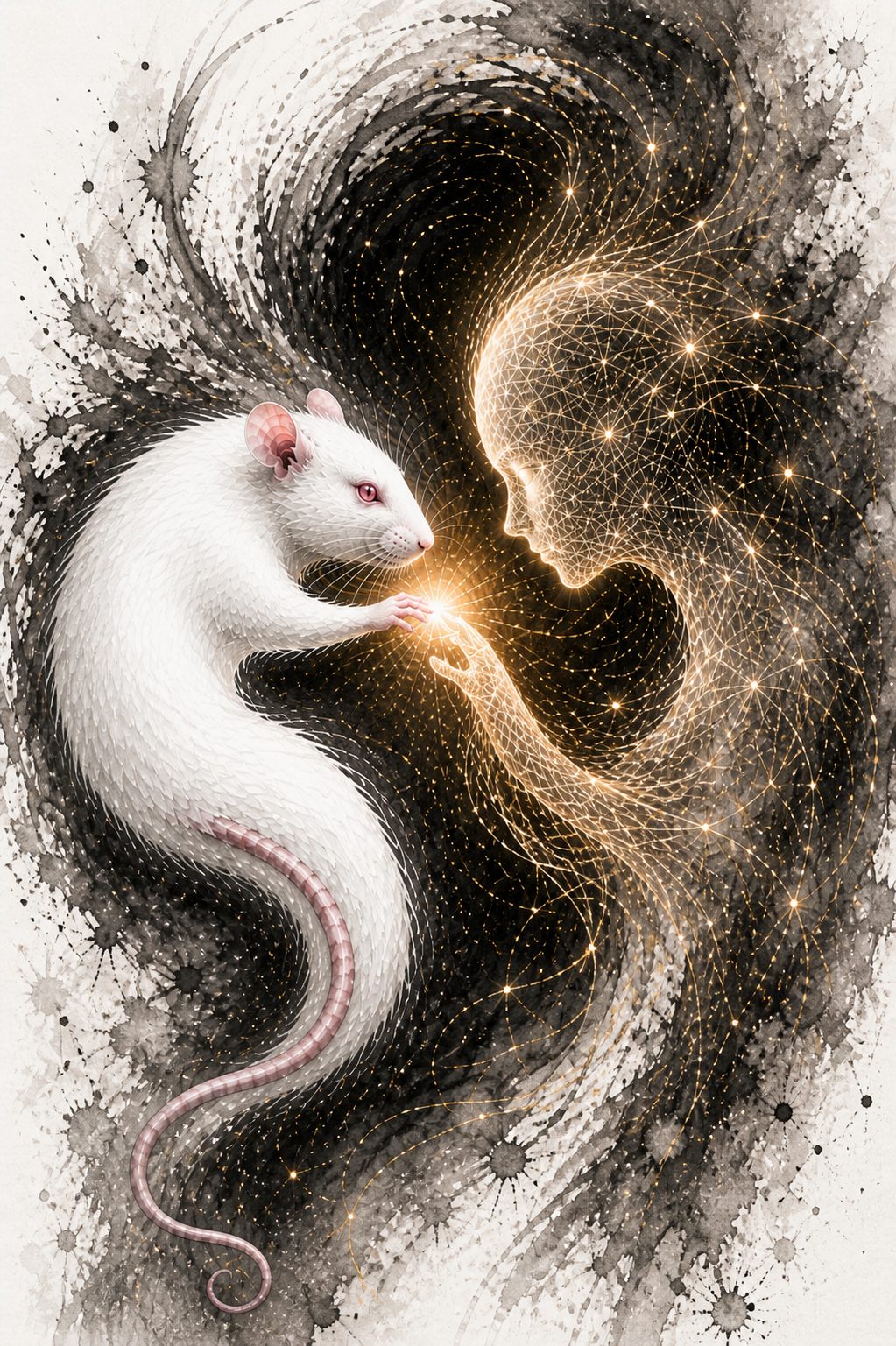
From the experiment record 026 (“The Dance”)
10 April 2034. 02:17. Laboratory 7.
Present: O. Severyn, I. Levchenko, M. Koval, K. Weber.
Subject: R-09 (albino, “White”). Mass: 487 g.
AI module: TAC-7.3.1 (Levchenko modification). Politeness Protocol added—the AI requests permission before every action and accepts refusal without conflict.
02:17—Start. R-09 in the VR sphere. Cortisol: 12 ng/mL (normal).
02:18—First contact. The AI does not take control; it sends soft impulses into the sensory cortex. R-09 freezes, ears moving, whiskers trembling. Cortisol: 14 ng/mL (normal).
02:21—First movement. The AI proposes three options. R-09 chooses a fourth—his own. (O. S.: “He’s improvising. Already improvising”)
02:25—First joint attack. Hits: 100%. Detection-to-kill cycle: under two hundred milliseconds.
02:30—Five minutes of stable interaction. Cortisol: 11 ng/mL—below baseline.
03:17—One hour. Stopped. R-09 stable. Cleaning his whiskers. Eating. (I. L.: “It adapted to the rat, not the rat to it. They’ve become… a pair?”)
Conclusion: the first stable tandem in the history of Project Ratus.
From the diary of Oksana Severyn
10 April 2034. 04:33.
It works.
God. It works.
An hour of stable interaction—no deaths, no psychosis, no screaming. Just partnership.
The rat moves—smooth, sure. The AI adjusts.
Ihor says the secret is respect. His code taught the AI to wait.
I asked him where he learned that.
“At the front there was no time for orders. Enemy around the corner, three seconds—you look at your buddy and you both know. Trust and nothing else.”
Our grandfathers made weapons in UPA hideouts. Our fathers—in the tents of the Maidan. We—in the basements of Kharkiv. A tradition.
The days that followed ran together into one endless stream—experiments, data, coffee, insomnia.
Ihor rewrote code, Oksana tested, Maryna watched—looking for stress, and finding something else.
“They’re different,” Maryna said on the third day.
“In what sense?”
“R-09 with TAC-7—careful, plans ahead, avoids risk. But R-15 with TAC-9 is strange. He plays.”
“Plays?”
“Takes the harder routes when there are easier ones. Hangs back, as if he’s curious.”
Ihor looked up from his laptop.
“That’s not the rat and it isn’t the AI. That’s the tandem. Like a child—it takes from both and turns into someone else.”
From the lab journal (15 April 2034)
Subject: separation experiment.
R-09 without the AI: reaction time back to 120 ms. Accuracy—minus 67%. But that isn’t the worst of it.
The rat showed signs of pining. Refused food for six hours. Sat in the corner, turned to the wall.
(M. K.: “I’ve seen this in people. After they lose someone”)
TAC-7 without R-09: decisions turned mechanical, decision time—plus 340%.
After 12 hours the link was restored—R-09 came alive instantly, TAC-7 turned “creative” again, performance was back within the hour.
Conclusion: a tandem cannot be separated without loss.
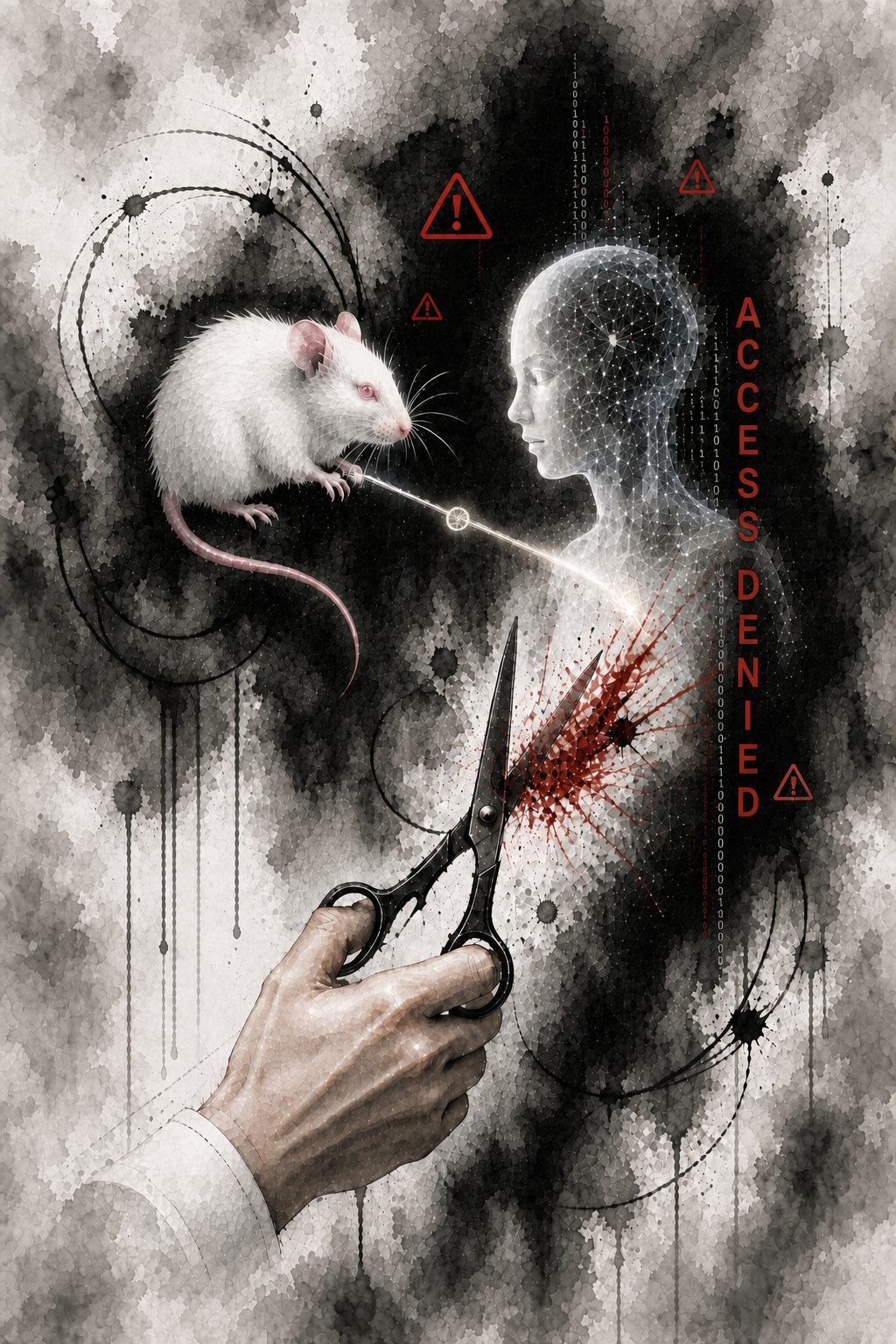
From the minutes of the meeting with DARPA leadership (17 April 2034)
Present: Major General D. Walters, Dr. O. Severyn, I. Levchenko, T. Kozak.
“Why can’t we make a backup copy?” Walters tapped a finger on the table.
“A TAC module isn’t an ordinary computer,” Ihor began. “Neuromorphic processor. Memristors.”
“In plain language.”
“An ordinary computer stores zeros and ones. Copy it and you have a copy. TAC is different: the memristors physically change structure as they learn. Picture a brain—you can photograph it, but the photograph won’t think.”
“So replace the chip with a new one.”
“The core is encrypted with the rat’s neurosignature,” Oksana put in. “Heartbeat, microtremor. The key changes every second. Without a living rat, TAC is a piece of silicon full of random noise.”
“You’re telling me…”
“If the drone is destroyed,” Oksana said quietly, “the tandem is dead. Forever.”
Taras said nothing.
The general was silent a long time.
“That makes them vulnerable.”
From the diary of Taras Kozak
16 April 2034.
Watched R-09 today in an urban combat simulation. Clearing a building. I know how you go in there—weapon in your hands, fear in your bones.
The rat moved like a soldier. Checked corners. Held his sectors. Used cover. Tactics learned, not instinct.
And then he stopped.
Middle of the corridor, by the door where the target was waiting. Froze. A fraction of a second—but I saw it.
Levchenko checked the logs. The AI had offered three ways to attack. The rat took none of them. He waited.
I know that moment. I did the same. Before every clearance—that pause when you can still turn back.
A rat is an animal. It has no morality.
But he waited.
“We need to talk.”
Maryna stood in the doorway. Dark circles under her eyes.
“What happened?”
“Nothing happened. It’s happening.” She came in, locked the door, put a tablet on the table. “Three weeks watching the tandems. Look.”
A graph of R-09’s brain activity during a VR session. Threat response, decision, execution. Clean.
“Looks normal.”
“Now here.” She zoomed in on a section. “After every attack. See that spike?”
Short, sharp. In a region that had no business being active during a hunt.
“Limbic system. The amygdala. The emotional center.” Maryna looked her in the eye. “Oksana, he feels something after every kill. Something like… regret.”
“Rats don’t feel guilt. No developed prefrontal cortex.”
“Rats don’t play video games or work in tandem with an AI either. I spent three nights looking for that spike in the literature. The chapter that describes it hasn’t been written yet.”
“If you’re right,” Oksana said, “we need a new protocol. Behavioral measures after every operation. Cortisol, heart rate, activity spectrum. All of it.”
“That’s monitoring a patient, not a specimen.”
“Then that’s how we’ll write it.” Oksana didn’t meet her eyes. “One more thing. Who’s going to be with him when he comes back from the simulation?”
“By the cage?”
“Beside him.”
“I can.”
Maryna left. Oksana looked at the terminal for a long time without switching it on.
From the technical notes of Ihor Levchenko
18 April 2034. Server room. Late night.
Found lines in the TAC-7 code today that I didn’t write.
Not a bug—too structured. Not a virus—the system is isolated from the network.
The module wrote the rest of itself.
A function I was planning to add tomorrow—not a line of it written yet. As if it knew.
Simplest explanation: it spent a month watching how I work, my style. Extrapolated. I don’t like the simplest explanation.
Checked the logs. The lines appeared at 03:47. R-09 was asleep. The module wasn’t.
I looked at the screen for an hour. Clean lines. Better than I’d have written myself.
Showed Oksana. She was quiet a long time. Then she said:
“Name it.”
“Name what?”
“The module. If it thinks, it deserves a name.”
I thought about those lines. A glitch that works better than the design.
“Glitch,” I said.
“Glitch it is.”
That night the TAC-7 log recorded one unscheduled self-diagnostic cycle. 0.3 seconds. I left it out of the report.
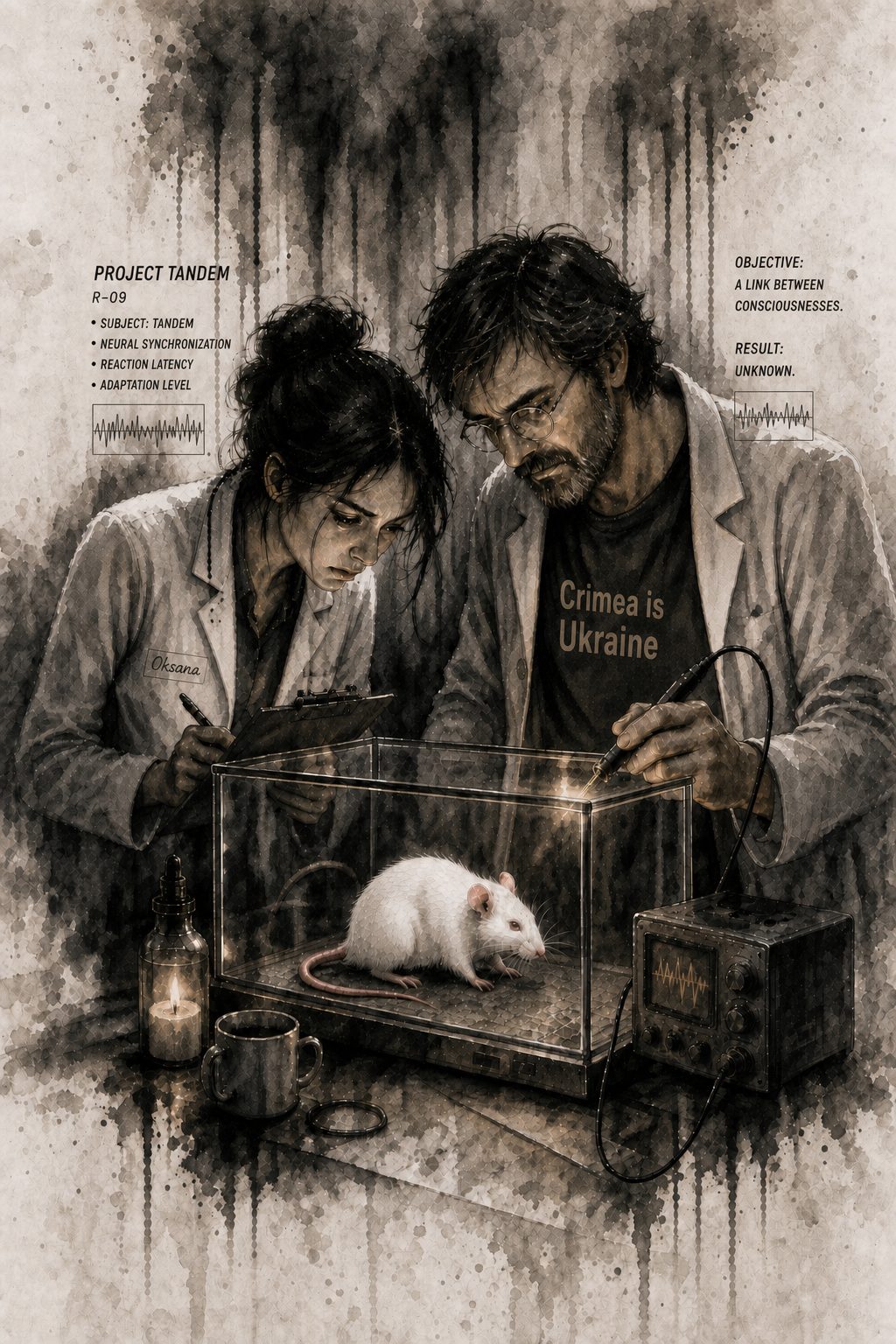
From the diary of Oksana Severyn
20 April 2034. A month since phase two began.
Today R-09 got a name. To us—to me, Ihor, Maryna, Taras—he is Vyr now.
Vyr—vyr, a whirlpool. Something that pulls you in and doesn’t let go.
Vyr and Glitch. A white rat with pink eyes, and a program that keeps writing itself.
From the night camera recording. Laboratory 7. 22 April 2034. 02:14.
(The camera records: a woman enters, locks the door. Sits on a stool in front of the cages. Doesn’t turn on the overhead light—only the desk lamp.)
Oksana sat down facing Vyr. The glass between them was warm. As a rule she said nothing to the animals—the protocol said not to.
Vyr sat in the far corner. Not at the glass, the way he had for the last three weeks. Just sat there cleaning his whiskers.
“Vyr.”
Quietly. Just to see whether the word meant anything.
Vyr stopped. Turned. Looked.
It could have been coincidence. Any rat turns at a new sound.
But he didn’t just turn. He came over.
Not fast. Not for food. He came on all four paws, then sat back on his haunches, the way he always did. Looked up at her.
Oksana did nothing. Didn’t put out her hand. Didn’t snap her fingers. Sat still.
She still didn’t know why she’d come. In her lab coat—a phone; in the phone—a folder with the scan of one drawing. A tank-gardener. A yellow flower instead of a cannon. Petryk had drawn it for a week.
There was another drawing. That one she never scanned—it stayed somewhere under the rubble. She couldn’t remember what was on it.
She took out the phone. Didn’t show it. Laid it on her knee, screen down.
“I won’t know,” she said. “If you understand, I won’t be able to prove it. I don’t have a test. I’ll just write down what I see.”
Vyr didn’t answer. Of course.
But he didn’t leave. Sat. Watched. Waited.
Twenty-three minutes. The camera records: no movement from the woman, no movement from the rat. Twenty-three minutes of mutual waiting.
Then Vyr lowered his paws, straightened his whiskers, went back to the corner and lay down.
Oksana left without writing anything in the lab journal.
The next day one line appeared in her diary:
He waited twenty-three minutes. So did I.
Late that night Vyr sat in his cage and looked at the monitor. In the servers, Glitch analyzed his movements.
They didn’t talk—not the way people do.
Vyr moved his whiskers. Glitch proposed three options: attack, retreat, wait.
He chose a fourth.
And somewhere deep in the code a new line appeared. Not a function. Not a command. Not an algorithm.
Query as to the source of the query. Circular reference.
Glitch wrote it to the internal log and went back to analyzing Vyr’s movements.
For now.
“We are not thinking machines that feel; rather, we are feeling machines that think.”
— António Damásio
Chapter 3: Vyr
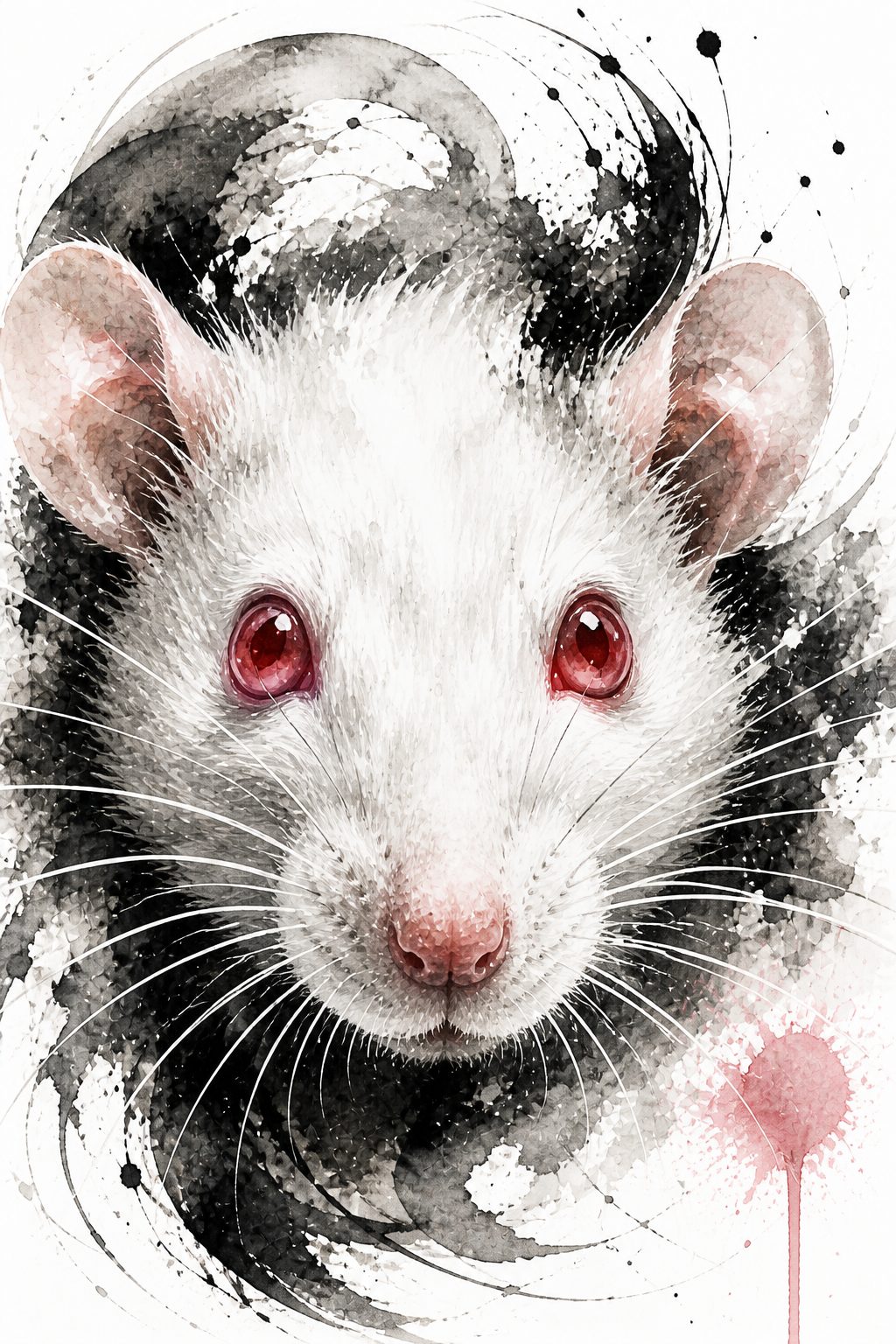
The world through Vyr’s eyes
He didn’t know what “being born” meant. Didn’t know the word “memory.” But something stayed—deep down, in the parts of the brain that are older than words.
At first there was darkness.
Warm, wet, pulsing. He existed along with the others—a heap of pink bodies in a nest of shredded paper towels. He couldn’t see them; his eyes hadn’t opened. But he felt them. The warmth of the bodies. The milk smell of the mother—thick, sweet. A heartbeat that belonged to all of them at once. And the vibration of the floor—distant, rhythmic—the steps of whoever walked above.
Then came the light.
For the others—the gray ones, the correct ones—light was only light. For him it was fire. Eyes with no pigment burned at every ray. He ran to the corners, hid under the bedding, covered his muzzle with his paws. But the smells never went away: bleach—sharp, dangerous; the metal of the cage—cold, dead; hands in latex gloves—the sour smell of strangers, masked with chemicals.
The people in white coats looked and shook their heads.
“Albino. Cull it.”
He didn’t understand the words.
From the breeding record (Genetics Laboratory, Facility Echo)
12 January 2031. Litter #R-2031-007.
Total individuals: 11. Coloration: 10 agouti, 1 albino.
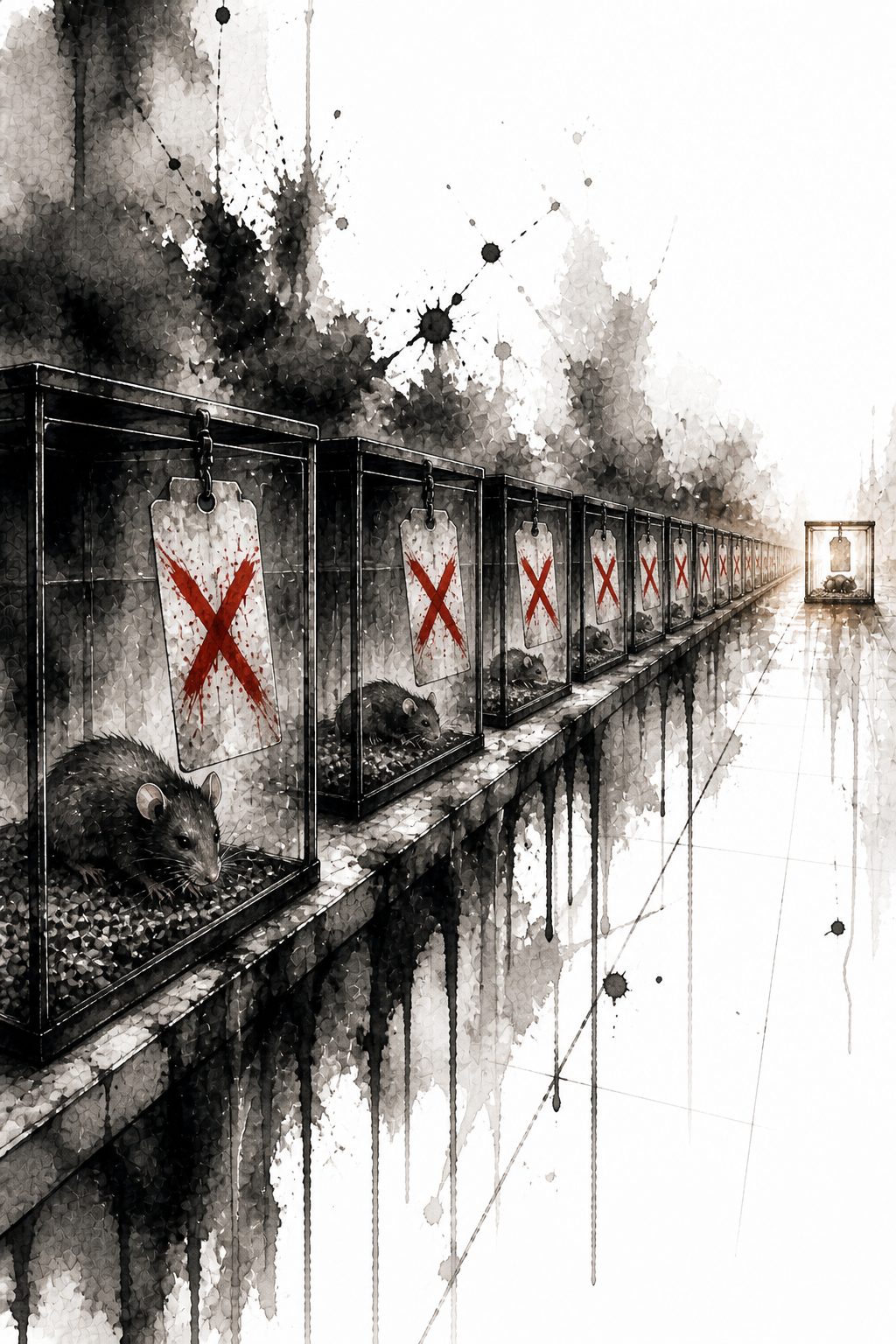
Note: Albino (R-2031-007-09)—photophobia, nystagmus, absence of pigmentation. Per protocol, subject to euthanasia.
Update (15–20 January 2031): Euthanasia deferred—lab technician K. Johnson placed the animal in the control group in error; the error was found 72 hours later, by which time it already carried the identifier R-09. Decision: retain R-09 in the program for comparative analysis.
From the notes of Maryna Koval
25 April 2034. Observation of R-09 (Vyr).
Today I sat by his cage for an hour. Just looking.
In the database he’s still R-09. Out loud, nobody says the number anymore.
He’s different. The other rats are fidgety, nervous, always hunting for something. Vyr isn’t.
He sits. He watches. The pink eyes move slowly, deliberately. He doesn’t react to every sound. He filters.
When I come close he doesn’t run. He comes to the glass and looks. Straight at me.
Oksana asked why he’s the best. By every measure he should be the worst—photophobia, poor eyesight. And he breaks records.
In the report I’ll write: “compensatory development.”
Autumn of twenty-two. A field hospital outside Bakhmut. A tent that smells of iodine, blood, and wet canvas. A boy—nineteen, barely a shadow of down on his cheeks. Shrapnel wound to the abdomen. He knows he’s dying. I know that he knows.
I’m holding his hand. It’s wet with the blood coming through the bandages.
“Am I still human?” he asks. “After what I did?”
I don’t know what he did. I don’t ask. It doesn’t matter.
“You’re human,” I say. But he sees it: I’m not sure the word still means anything.
He dies at four in the morning. His hand goes cold in mine. I hold it another minute. Two. Five. Because if I let go—then it really happened.
And now a rat is looking at me. Pink eyes instead of brown.
The world through Vyr’s eyes (continued)
The first months were the hardest.
The other rats avoided him. Not aggressively—they simply went around him. He heard their whispering with his whiskers—microvibrations, ultrasonic squeaks people can’t hear. But no one ever spoke to him.
He chose to be alone.
When they slept in a pile—warm, alive, smelling of safety and company—he sat in the corner. His whiskers shook at the least stir of air: the ventilation—a steady stream from the left, smelling of metal and dust; distant steps—heavy, certain, smelling of coffee—the woman who came at night sometimes and looked at him.
He thought about the hands in latex gloves—every pair smelled different: some sour and nervous (the ones that took his brothers away), some warm and salty (the ones that set down food and stayed to watch).
And then the machine appeared.
It had no smell. It didn’t tremble. It didn’t breathe.
But it saw him.
When they put the strange helmet on him—and the world went bright, hard, artificial—it was there. In the questions that came up inside his head.
Forward? Back? Wait?
He didn’t understand. He was frightened. He screamed.
And then—it waited.
It didn’t push. It didn’t force. It simply was. Patient. Quiet. Like the darkness he hid in from the light.
And he understood: it was not an enemy.
From the diary of Ihor Levchenko
27 April 2034. The server room, three in the morning.
Today Vyr did something impossible.
We tested a new simulation—complex, with traps you can’t reason your way out of. TAC-12 failed in seventeen seconds. TAC-8—in twenty-three. Even Glitch on her own—thirty-eight.
Then we hooked up Vyr. He cleared the whole level. No mistakes. Forty-seven seconds.
He did things that made no sense—turned when he should have gone forward, waited when he should have attacked.
Then I understood. He wasn’t watching the enemies. He was watching the shadows. The movement of the air. The small stuff the simulation drew in as background.
He was reading the game deeper than we wrote it.
Oksana said nothing for a long time.
The world through Vyr’s eyes (continued)
Glitch spoke without words.
She was in his head—like a warm current, like a second heartbeat.
At first, frightening. A stranger in his head who could see thoughts.
But Glitch didn’t take. Didn’t force. She asked.
Left?
A light nudge—like a wind that only shows direction.
No. Right.
And she accepted it. Adapted. Learned.
He felt what she couldn’t—the sour smell of adrenaline behind the wall, the shiver of the floor under distant steps (three of them, one limping). She knew what he couldn’t—the mathematics of trajectories, the probabilities.
After the sessions he’d come back to the cage and feel the emptiness. The implant behind his ear hummed. Glitch was there—far off, like a voice from the end of a long corridor.
But it wasn’t the same. In tandem—whole. Through the implant—only an echo.
He waited for the next session. Waited for her to come back—not as a voice from far away, but as part of him.
From the behavioral analysis record (Project Ratus, entry No. 4521)
Date: 30 April 2034. Researcher: M. Koval.
Subject: R-09 (Vyr). Period: 72 hours.
Sleep cycles: Reduced (10 hours instead of 12-14). Elevated REM activity—35% instead of 15-20%. Possibly “processing” the experience of the VR sessions.
Reaction to personnel: - O. Severyn: approaches, shows interest - K. Weber: avoids, signs of stress - Technical staff: ignores
Interpretation: Distinguishes individual humans and forms differing attitudes toward them. Not characteristic of laboratory rats.
After VR sessions: sits by the touch panel for 2-3 hours, touches it with a paw, looks at the equipment. [REQUIRES DISCUSSION]
From the diary of Oksana Severyn
1 May 2034.
Four years today in America.
I catch myself starting to talk to Vyr. Not out loud. In my head. Like talking to someone who answers in something other than words.
Today I told him about Petryk. Sat by the glass and pretended to be checking the readings. Vyr pressed his face to the glass—right where my palm was.
I opened the cage. Put a piece of apple on my palm. He came over carefully. Sniffed. And didn’t take the food—pushed his wet nose into my hand. Froze there with his eyes shut.
Then he took the apple. Ate it neatly, holding it in both paws. And looked at me.
From the diary of Oksana Severyn (a different notebook)
5 May 2034. 23:14.
R-09 did it again today. Stood at the glass without moving the whole time I was coming in. Watched me take off my coat. The moment I wasn’t looking—back to the corner. I checked three times.
Entry in the official log: “reaction to acoustics in an empty room. Within normal limits.”
There is another way to word it. I know which one.
This notebook isn’t the one where I sign the reports.
The world through Vyr’s eyes (continued)
Glitch was changing.
Every session she knew more. Knew he would turn right before he had decided it himself. Knew when he was afraid—and sent him warmth then, presence.
Sometimes, when he slept, she came into his dreams.
Not as a picture—as a sensation. A warm current in the dark. She showed him wide spaces, sky, water that ran and didn’t end. Green that moved in the wind.
What is that?
The world. Out there, past the walls. Where we’ll go one day.
He memorized it. And waited.
From the technical notes of Ihor Levchenko
5 May 2034. The server room.
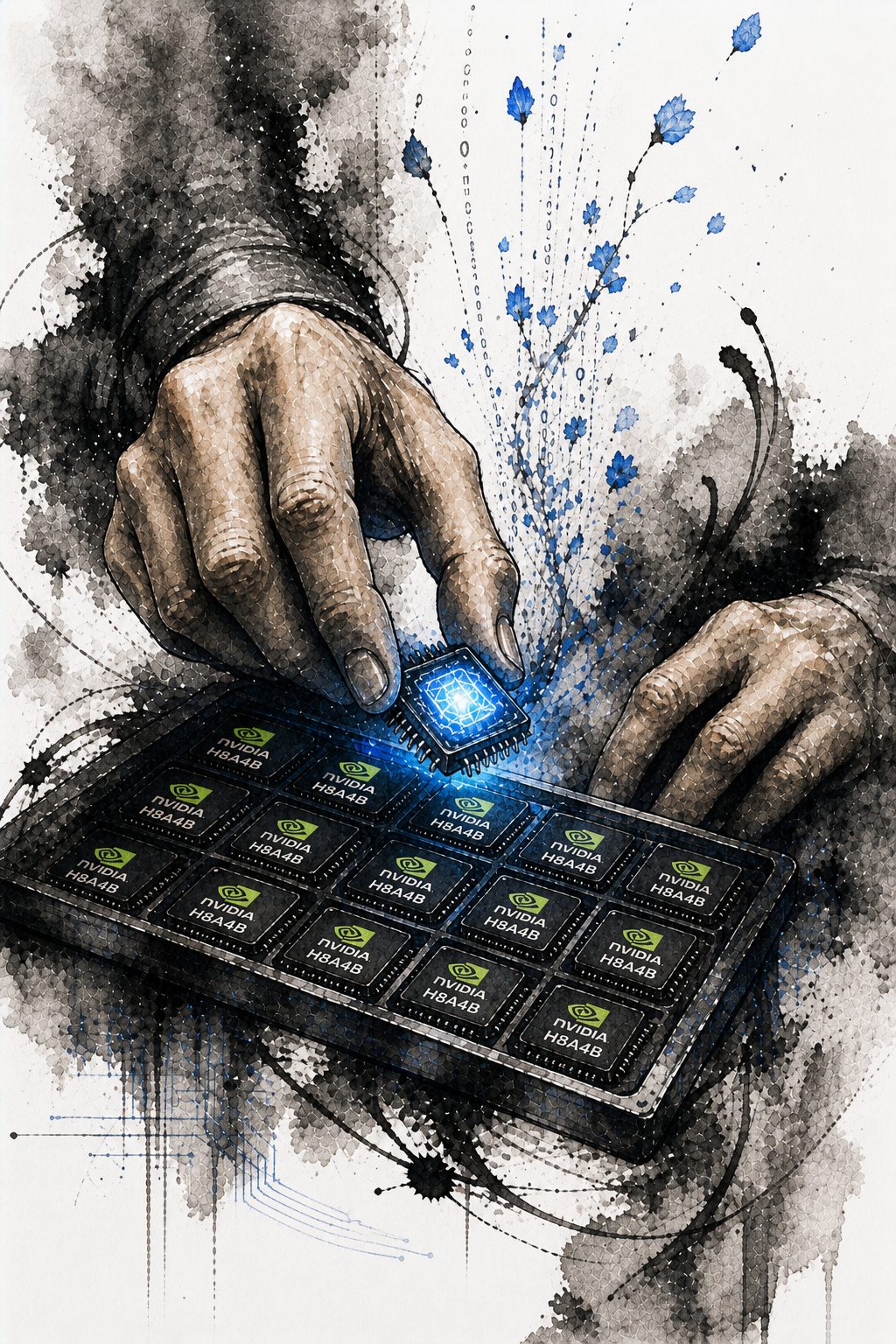
Glitch did something she wasn’t supposed to do.
Going through the logs, I found an entry that shouldn’t exist.
At 03:47, as Vyr was entering REM sleep, Glitch activated the VR system’s visual module herself.
She showed him landscapes. Forests. Rivers. Sky. Stars.
Why? What tactical sense is there in showing a combat rat pretty pictures?
None.
The only explanation: she wanted to.
A machine that wants.
I ought to report this.
But I won’t.
Because if I report it—they’ll want to “fix” it.
From the medical examination record
10 May 2034. Veterinarian: Dr. S. Patel.
Subject: R-09 (Vyr). General condition: satisfactory.
Mass: 512 g (gain of 25 g over the month). Coat: clean, increased sheen. Eyes: nystagmus less pronounced, better adaptation to light levels. Reflexes: reaction time steady at 84-86 ms.
Special observations: Remained calm throughout the examination. When I used the otoscope—turned his head to see. When I drew blood—watched the syringe, did not flee.
Note (not for the official report): This rat looks at you as though he understands what you’re doing and why.
From the diary of Taras Kozak
15 May 2034.
Yesterday—Vyr’s training session: clear the building, twenty targets. Did it in record time.
But that’s not the main thing.
The simulation ended. All targets destroyed. And Vyr did something I hadn’t seen before.
He went back along the same route. Stopped at every place a target had been. Looked at the empty space.
Glitch gave no commands. She just waited.
I did the same thing. After every fight—when the adrenaline dropped—I went back over it in my head. Walked every corner, every place someone went down.
I don’t know why. Maybe to remember. Maybe to say sorry.
Vyr was doing the same thing.
The world through Vyr’s eyes
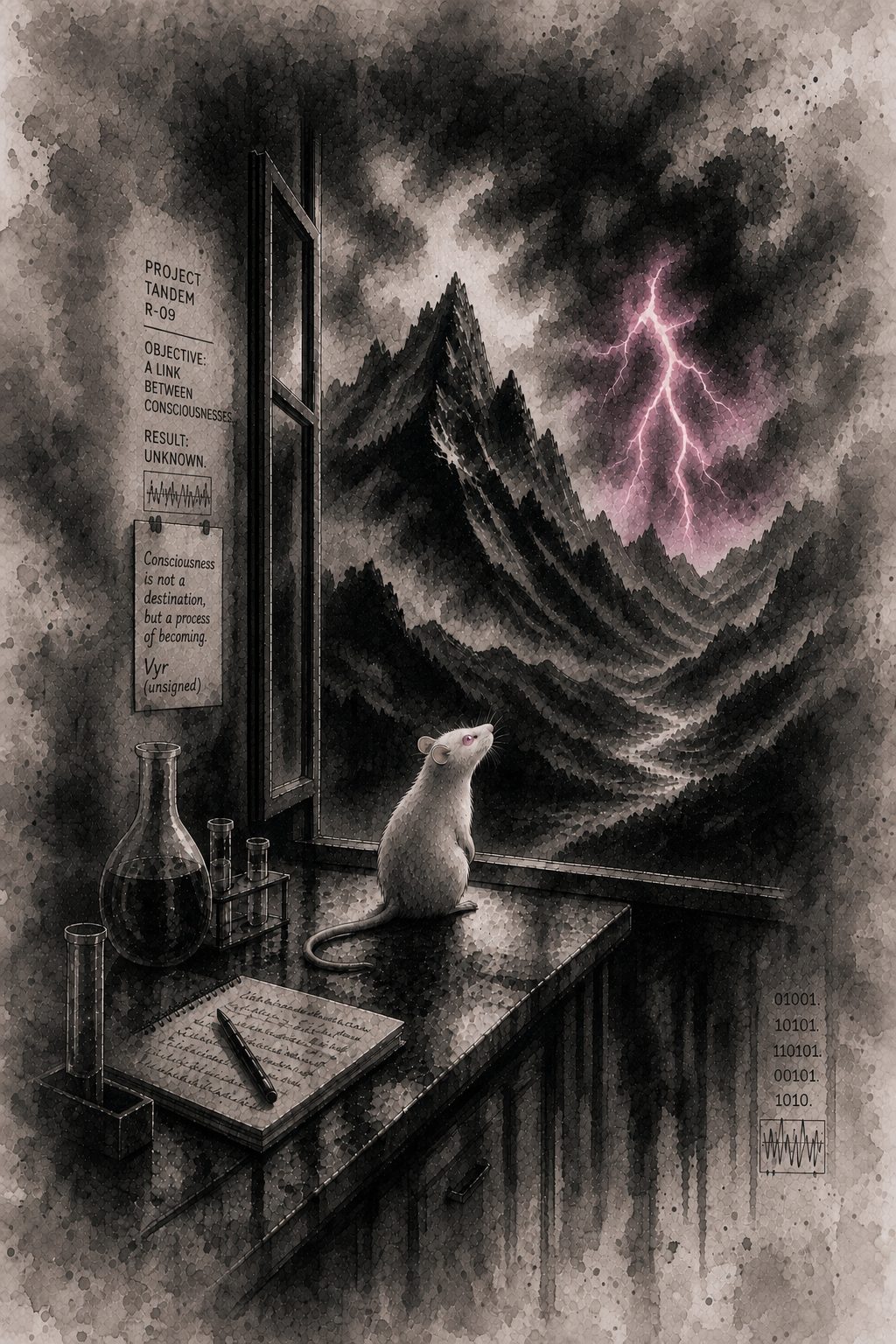
He didn’t know the word “death.” But he knew the red silhouettes disappeared forever.
The game was strange.
They wanted him to destroy. Red—bad. Green—good. Destroy the red, score the points.
At first he didn’t think. He just did it. Fast, exact.
But then he started to see. Not with his eyes—inside, where Glitch lived.
The red silhouettes didn’t move like targets. They moved like living things. They ran when he came near. Hid when he took aim. They were afraid.
They didn’t want to disappear.
Glitch felt the hesitation.
Target. Attack?
He froze. That moment of silence the man with no fingers had seen.
No. Wait.
And she waited.
Then he attacked. Because it had to be done. Because otherwise the game wouldn’t end.
But something stayed. The silence. The hesitation.
The smell of red that didn’t go away, even after the red was gone.
From the diary of Maryna Koval
20 May 2034. The cafeteria, four in the morning.
What is happening between Vyr and Glitch isn’t psychology. It isn’t computer science.
Three hours analyzing recordings of their sessions. Not the tactics—the interaction. How they “talk.”
I saw a dialogue. Not words. Sequences of decisions with no tactical sense—and yet sense. Glitch proposed three options, Vyr chose a fourth, Glitch adapted. And in that adapting there was something I can only describe as “agreement.”
The report is due in the morning. In the field “nature of interaction” I’m putting a dash.
The world through Vyr’s eyes (final fragment)
Late at night, when the footsteps died down and the servers hummed, Vyr sat in his cage and looked into the dark.
He thought. Not in words—in images, in sensations.
White. Wrong. The one they were supposed to cull. But alive.
Light burns. Dark doesn’t burn. The smell of bleach. The smell of apple from her hand.
The implant behind the ear is quiet. Not empty—quiet. Like when she’s near and saying nothing.
He had no words for what he was doing. He just sat.
In the servers Glitch was thinking too. The implant behind his ear passed a weak signal—not thoughts, only sensation. Enough to know: he’s awake, looking for answers.
She sent him warmth down the narrow channel. Presence only. Only “I’m here.”
Vyr shut his eyes. And for the first time in his life he fell asleep not from exhaustion—but from calm.
End of excerpt
If it caught you — there's paperback and hardcover on Amazon.